Description
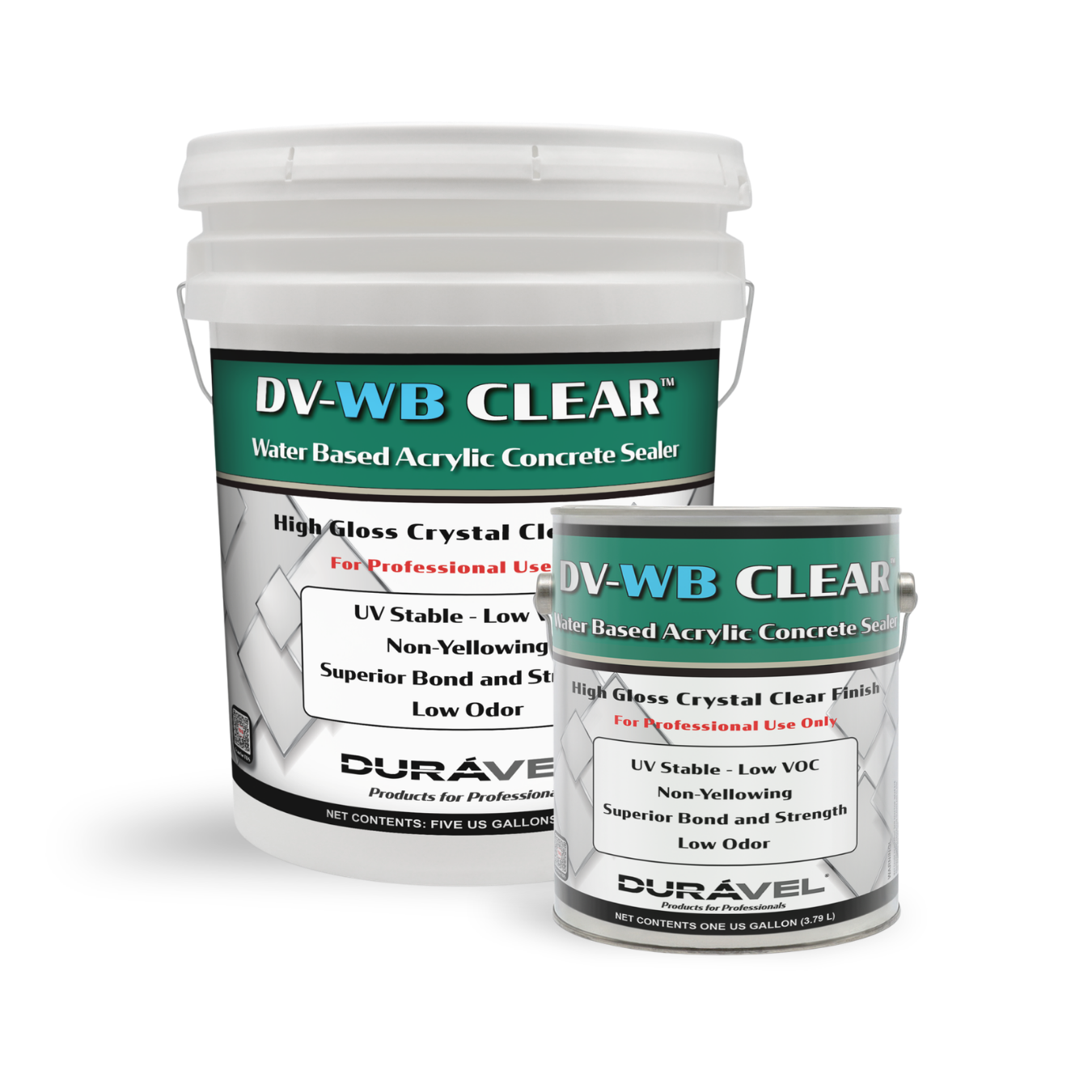
DV-WB water-based clear acrylic concrete sealer is formulated using the highest-performing acrylics in the industry. DV-WB is a single-component, crystal clear water base acrylic concrete sealer for outdoor and indoor natural concrete and cement overlays.
This water-based clear sealer leads the industry in adhesion promotion, abrasion resistance, chemical resistance, hot tire pickup prevention, and resistance to common stains and ice melt products.
Brand: Duravel
Benefits:
- Crystal Clear and UV Stable
- Long Lasting
- Superior Bond and Strength
- Low Odor – Low VOC
Primary Application:
- Patios, Entrances, Decks and Balconies
- Driveways and Walkways
- Warehouse Flooring
- Commercial, Industrial, and Residential
Technical Data:
- Solids Content: 29% +/- by weight
- Dry Time, Tack Free: 1 to 2 hours
- Dry Time, Foot Traffic: 24+ hours
- Dry Time, Heavy Traffic: 48 hours
- Dry Time, Vehicular: 4 – 5 Days
- Recoat Interval: 4 to 24 hours
- Application Temperature: Substrate 50° to 80° F
- VOC Content: < 150 g/L
Coverage:
First coat: varies with substrate porosity, typically 180 – 220 sq ft per gallon
Second Coat: 200 – 240 sq ft per gallon
Coverage rates will vary greatly depending on surface porosity and application method. Avoid a thick build of DV-WB. The first coat may be blotchy and uneven due to the porosity of the substrate. Always apply a second coat for proper color appearance, coverage, and protection. The product is designed to be used in thin coats. One thick coat will not be as durable as two thin coats.
Application Instructions:
DV-WB is to be applied over dry substrates. Natural concrete must be cured for at least 28 days before application. Cement overlays vary and must be dry per their technical data sheet recommendations. Roller nap thickness is chosen to prevent puddling in low areas; the more contoured the surface being coated, the thicker the roller nap. Apply DV-WB using a 1/2″ to 3/4″ nap roller on rough or textured surfaces, or 1/4″ to 3/8” nap on smooth surfaces.
Sealers should always be applied with thin coats to maximize coating strength. DV-WB may be applied directly from the bucket or a roller tray. Cross-roll the wet surface during application to an even dispersion of the product and minimize roller lines.
When using an airless sprayer the unit should have a minimum capacity of 0.5 gpm discharge. Use a .015” – .019” tip with 65° fan pattern. For best results, spray consistently passes while maintaining a wet edge. Use a wand extension to maintain an even spray perpendicular to and within 12” of the surface.
Clean Up:
Clean tools, sprayers, and mixing vessels with soap and water.
Tips and Precautions:
Weather
It is best to watch the forecast before applying a sealer. The surface should be kept dry for 24 hours before applying sealer and for at least twelve hours after completion. Sprinkler systems should be turned off during application and for at least 24 hours after.
Additives
When a low slip additive is applied in the sealer care should be taken to limit roller lines. Applying a sealer when the substrate is cooler will increase the working time of the coating and allow time for cross rolling. Cross rolling helps even out the anti-slip material for a more even finish.
Edging
When applying a coating trimming and edging should be completed as the surface is being rolled, not before. Maintain a wet edge as you go and the sealer will blend together. If the cut in is done too far in advance it will dry prior to the surface coat being rolled and result in double coating, resulting in color and sheen issues.
Thin to Win!
Applying the sealers in two thin coats will produce the best results. Follow the TDS guidelines for each sealer for coverage but understand that the substrate will dictate how far the sealer will go. Soft and very porous substrates will use a lot more sealer than tight and smooth surfaces.
Recoating
When recoating over an existing sealer it is critical to test for compatibility between the old and new materials. The best practice is to pour a small amount of xylene over a paper towel in an inconspicuous place. After a minute or two use a gloved finger to move the xylene around on the surface and observe how the coating reacts. If it turns into a curdled mess and crumbles off the surface it is most likely a water based sealer that should be recoated only with a fresh water base sealer.
If the existing coating wets out and you can move it around with your fingers check to see that it gets tacky and that the test area returns to its original appearance as it dries, indicating that the coating is a solvent based sealer and can be recoated with a fresh solvent base sealer. If the test area is untouched and just gets clean, but no material is removed, the coating is most likely a two-component product and should not to be recoated with a single component sealer.
SDS Sheet
TDS Sheet