Description
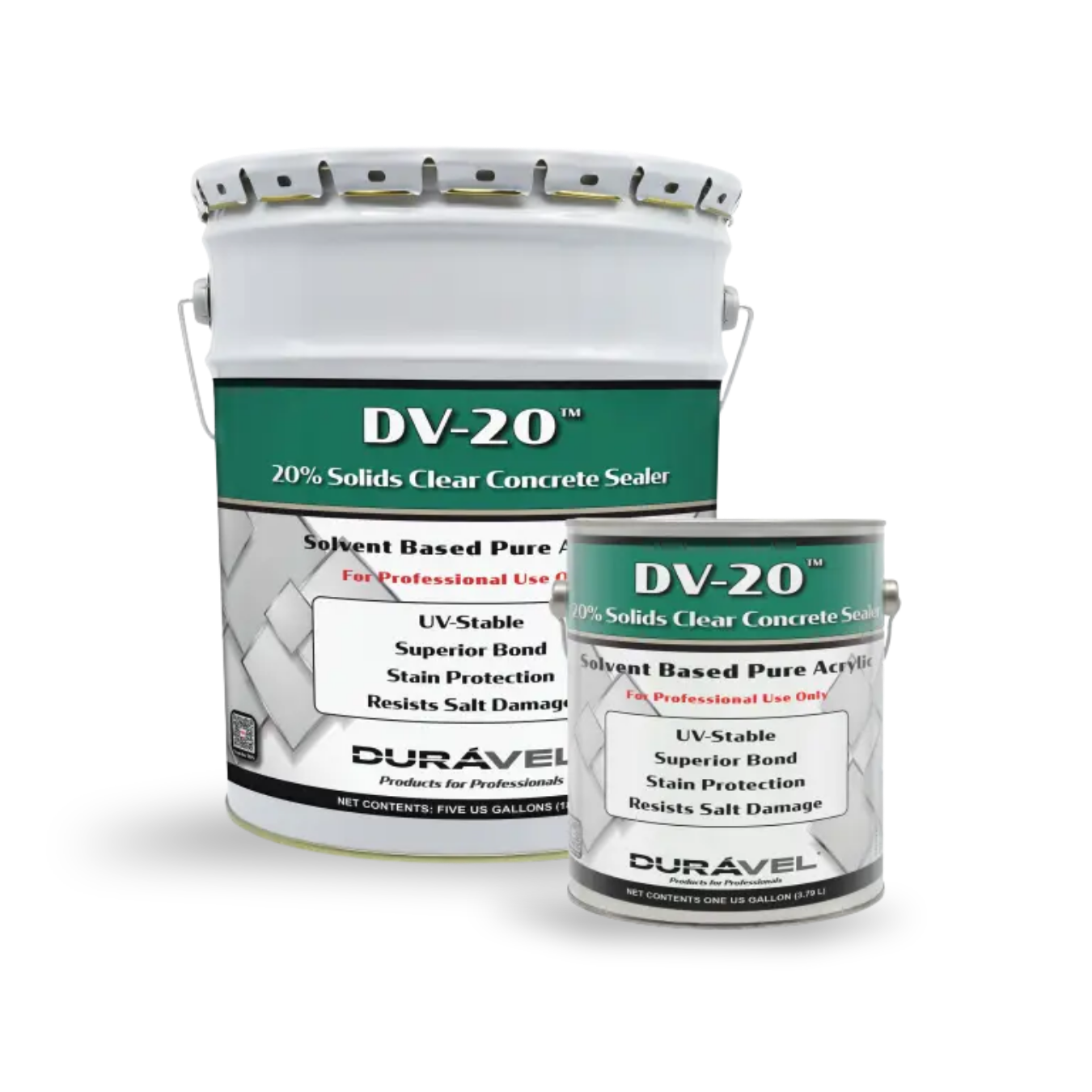
Durável DV-20 is a clear, high-gloss, color-enhancing solvent-based acrylic concrete sealer engineered for strong adhesion to natural concrete and cement-based overlays. This 20% solids methyl methacrylate sealer penetrates the surface and dries to a crystal-clear, UV-resistant, non-yellowing finish that enhances color and protects decorative concrete.
An advanced silane/siloxane component improves adhesion, increases mar resistance, and helps simplify future recoating. DV-20 provides durable protection and a rich gloss finish for interior and exterior concrete surfaces.
Brand: Duravel
Features:
- Clear Non-Yellowing UV-Stable Acrylics
- Typical Coverage 180 to 200 sf/gallon
- Solids Content 20% by weight
- Dry Time, Tack Free: 25 to 60 minutes
- Dry Time, Foot Traffic: 24 hours
- Dry Time, Heavy Traffic: 4 to 5 days
- Recoat Interval: 2 to 24 hours
Durável DV-20 is formulated with pure methyl methacrylate acrylics to protect concrete from UV exposure, traffic, weather, deicing salts, and many common stains. This vapor-permeable solvent-based acrylic sealer helps reduce fluid penetration while allowing moisture vapor to escape from the concrete.
DV-20 can be applied to natural concrete, integrally colored concrete, stamped concrete, and decorative cement overlays. Its clear, high-gloss finish enhances surface color while improving abrasion resistance, stain resistance, and long-term protection.
Ideal applications include driveways, walkways, patios, porches, balconies, and other interior or exterior concrete surfaces.
Coverage will vary depending on the application method and the porosity of the surface. Typically, one gallon will cover about 180–200 sq. ft. of concrete or overlay.
Sealer should always be applied in thin coats to maximize coating strength and durability. For new applications, apply two coats. For clean and reseal applications, one protective coat over an existing compatible sealer may be all that is needed.
DV-20 must be applied over a dry surface. Natural concrete must cure for at least 28 days before application. Cement overlays vary, so they must be dry according to the recommendations in their technical data sheet.
Choose the roller nap based on the surface texture. Use a thicker nap on rough or contoured surfaces to help coat the profile without leaving puddles in low areas.
Use:
- 1/2″ to 3/4″ nap roller on rough or textured surfaces.
- 1/4″ to 3/8″ nap roller on smooth surfaces.
Always apply DV-20 in thin coats to maximize coating strength and durability. DV-20 may be applied directly from the bucket or from a roller tray. For even product distribution and to reduce roller lines, cross-roll the wet surface during application.
When using an airless sprayer, the unit should have a minimum discharge capacity of 0.5 gpm. Use a .015″ to .019″ tip with a 65° fan pattern. For best results, spray consistent passes while maintaining a wet edge. Use a wand extension when needed to keep the spray even, perpendicular to the surface, and within 12 inches of the surface.
Clean tools, sprayers, and mixing vessels with Xylene.
- Natural Concrete and Overlays
- Driveways, Walks, Porches, Balconies, and Patios
- Stamped Concrete
- Commercial and Residential Concrete
- UV-Stable Pure Acrylics
- Superior Bond to Concrete and Overlay
- Protection from Stains and Chemicals
- Resists Salts, Acidic Stains, and Other Damage
Check the forecast before applying sealer. The surface should stay dry for 24 hours before sealer application and for at least 12 hours after the work is complete. Turn off sprinkler systems during application and keep them off for at least 24 hours after application.
When using a low-slip additive in the sealer, take care to reduce roller lines. Applying sealer when the surface is cooler will increase the working time of the coating and allow more time for cross-rolling. Cross-rolling helps spread the anti-slip material more evenly, creating a more consistent finish.
When applying a coating, trimming and edging should be done while the main surface is being rolled, not ahead of time. Maintain a wet edge as you work so the sealer blends together evenly. If the cut-in areas are done too far in advance, they may dry before the surface coat is rolled. This can create double coating in those areas, which may cause color and sheen differences.
Thin to Win! Applying sealer in two thin coats will produce the best results. Follow the coverage guidelines in the technical data sheet for each sealer. However, the actual coverage will depend on the condition and porosity of the surface. Soft or very porous surfaces will use much more sealer than tight, smooth surfaces.
When recoating over an existing sealer, always test for compatibility between the old sealer and the new sealer.
The best practice is to place a paper towel in an inconspicuous area and pour a small amount of xylene over it. After 1–2 minutes, use a gloved finger to move the xylene around on the surface and watch how the existing coating reacts. If the coating turns into a curdled mess and crumbles off the surface, it is most likely a water-based sealer. It should only be recoated with a fresh water-based sealer.
If the existing coating wets out and can be moved around with your fingers, check to see if it becomes tacky. The test area should return to its original appearance as it dries. This indicates the coating is most likely a solvent-based sealer and can be recoated with a fresh solvent-based sealer.
If the test area is not affected and only becomes cleaner, with no coating material removed, the existing coating is most likely a two-component product. It should not be recoated with a single-component sealer.
Safety Data Sheet
Technical Data Sheet